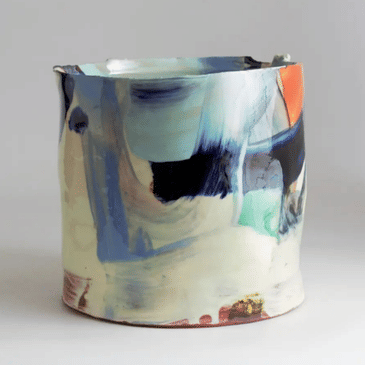
Enjoy Bob's interview with Barry Stedman, a UK potter who uses brilliant colours in his work. Bob and Barry talk about his journey in clay, his use of colour and the specific techniques he uses to produce such lovely work.
Barry can be found on his website at https://www.barrystedman.co.uk/ and in Instagram at https://www.instagram.com/barrystedman
[00:00:00] I'm Bob Acton and I'm here today with Barry Stedman. Barry is a potter and painter,
[00:00:30] painter from England whose work I really enjoy. He uses an abstract painterly approach
[00:00:36] to his ceramic work and today we talk about his process, his color choices and some
[00:00:42] of the mysterious experiences artists have with color. Barry works with a terracotta clay
[00:00:48] base and then uses slips to apply his bright colors to produce pieces that have a truly
[00:00:54] organic feel to them. I hope you enjoy our conversation.
[00:01:05] Welcome to Colour and Ceramics, the podcast for ceramic artists who want valuable ideas
[00:01:10] about using color from leading artists and world class experts. Here's your host, Bob
[00:01:16] Acton, a sculptor and ceramic artist who's fascinated with color and how potters, sculptors,
[00:01:22] and artists use color in their work. Tune in as he talks with his guests about color,
[00:01:28] techniques and the impact of color on people and art itself.
[00:01:32] Barry, welcome to the Colour and Ceramics podcast to talk about color and surface decoration.
[00:01:39] I'm really pumped that you're here so thanks for coming on board.
[00:01:46] No problem. Very pleased to be and very pleased to have a chat with you.
[00:01:50] Yes, that's awesome. When I look at your work, I see this deep brilliant colors that
[00:01:58] you use on your pieces and when I look at your work, it's almost as if I'm taking to
[00:02:06] a new land, almost a new planet. It's so vibrant and has that effect on me.
[00:02:14] So I'm really intrigued about your approach to color and surface design.
[00:02:22] But when I look at your work, I see that your work really probably represents years of
[00:02:30] hard work. And so I wonder if you could tell us a little bit about your journey to get
[00:02:36] you here today?
[00:02:39] Yes, of course. So I came to Ceramics. I suppose lately I was just in my early 30s and
[00:02:51] I started doing an evening class in Ceramics actually and obviously I got hooked on it so
[00:03:01] I wouldn't be doing it now. But I do think one of the reasons I took to Ceramics is because
[00:03:10] previous to that, I did a lot of drawing and painting and mark making which I still do
[00:03:16] now and I still love it just as much. But I think I was looking for a way of being more abstract.
[00:03:27] I wanted to, I did a lot of drawing and painting out star but very figurative. I drew what
[00:03:33] I saw again and I still do that now. But Ceramics struck me as being immediately abstract,
[00:03:42] particularly vessel making which I took to straight away. That was my thing. And I thought
[00:03:48] I've got this abstract object straight away that I can apply color to. So right from the
[00:03:53] start that's why and that's what I was drawn to. And really I've carried on more or less
[00:04:01] doing the same thing. And I started an evening class and then I started two evening classes
[00:04:10] and then I decided I would either have to go with it and really push what I was doing
[00:04:19] and try and get better at it. And to do that I'd have to probably go to college. And at this
[00:04:28] time I was, I had my own business. I had a small shop selling flowers and plants and little
[00:04:37] bit of fruit and vention things and then had a little floristry business going alongside
[00:04:43] of that. And I enjoyed that. I knew that wasn't really what I wanted to do. But because I had
[00:04:51] my own business, I was able to take some time and I studied two days a week doing an H&D,
[00:04:57] a high national diploma in 3D design at a local college. And I did that for three or four years
[00:05:05] actually. It was a three year course and I did learn loads. And then when I finished there
[00:05:12] I managed to get on the degree course at Westminster, which was a fantastic ceramic course.
[00:05:21] And I went into the second year on that and by doing that that really helped. And I knew then
[00:05:33] that's what I was doing. But again, I did it part time so I was working at the same time.
[00:05:41] And then I managed to get, well I was on that course. I managed to get a job as a technician
[00:05:47] at the college where I'd done my original study. So I was a ceramic technician for a while
[00:05:53] and then I began to teach the evening class that I'd been on and then I started teaching on the
[00:05:59] foundation degree courses as well. And all of that stuff massively increased my knowledge because
[00:06:06] I had to help other people all the time with what they were doing. So I ended up with quite a
[00:06:11] wide range of skills in different areas. Yeah, so that's sort of how I got into it really.
[00:06:19] So very in your focus on colour and surface design, what motivates you? What do you get excited
[00:06:28] about these days? What gets you out of bed in the morning? Good question. I think it's funny because
[00:06:38] a few years ago, about three years ago, I did a body of work and I took it to a gallery and it was
[00:06:44] had very minimal colour and I had to do a little talk. Some people came to the show,
[00:06:51] did a little talk and I said yeah this is my new work and it had hardly any colour at all. And I said
[00:06:57] going forward, I shan't be using so much colour. And then ever since then, I've got more and more
[00:07:06] and more into colour and I just think that is my thing. And I think of my vessels in the same way as
[00:07:17] I think of my painting and colour is almost the starting point. So if I go out for a walk,
[00:07:28] I'm totally influenced by what's going on around me. I love nature, I love flowers and plurms
[00:07:37] all those things are an influence on what I do and I do quite a lot of painting outside and sketch
[00:07:44] but work. So colour is really the root of my practice.
[00:07:52] That's really interesting, I am reflecting as you are talking about my experience.
[00:07:59] I'm a big gardener and so if I get out in my garden, I'm thinking also about form and the
[00:08:06] shapes of flowers and so on. But you've really focused yours on the colour, whereas the shapes
[00:08:14] it sounds like are less important. Yeah I think so, I think it's a really good observation and
[00:08:22] the forms that I make, I obviously love making and I love form, I love vessels but I do think
[00:08:33] the forms I make are fairly sort of familiar forms, they're fairly straightforward forms and in a way
[00:08:42] I want the form to be almost, I don't know how to describe it. I don't want you to recognise
[00:08:53] the form as a particular thing so it's the reason I don't make jokers or cups or things like that.
[00:09:01] I tend to think of them as I open forms that feel like they're still growing and I want the colour
[00:09:08] to infuse the form so it becomes this complete coloured thing and it is important that it's a vessel
[00:09:19] because you know it contains air and it's got a sort of a definite life that people recognise
[00:09:28] in vessels but I don't want them to be seen as particular functional forms or necessarily even
[00:09:36] things to use, it's fine if you do, but that's not my motivation for making them.
[00:09:43] But you know when most of well, so in most yeah perhaps most of my forms are wheelthrowed
[00:09:50] and when I'm throwing I feel like I'm doing the under painting or the under drawing
[00:09:57] for a finished painting so it starts right at the beginning for me, this sort of mark making
[00:10:04] it starts with the throwing. It's seen when I look at your work I see this what I might call
[00:10:13] an organic form in the sense that it's yes we can see it's a cup or a plate but in a way it sounds
[00:10:22] like what you're doing is creating this organic form that is somewhat formless but it also
[00:10:32] works to be your canvas for the colour. Yeah definitely I think that's true, I always think
[00:10:43] because I do paint on canvas as well it feels very different in as much as
[00:10:49] what I like about painting on ceramics or on a round form is that you've not got a single view
[00:10:58] point where it's on a canvas, it's a very distinctive shape that you paint up to the edges and
[00:11:05] you make something happen within these edges whereas with a vessel I feel you know I can move it
[00:11:13] and change my view point the whole time and you can most of my work is small enough to handle
[00:11:20] and pick up and turn around and I think that's one of the big differences between
[00:11:29] painting a form like that a vessel form and a canvas but yeah I do I do feel like
[00:11:40] I feel if once I've made my full because quite often when you're throwing you throw a group
[00:11:45] of forms and you've got them there in your studio and you think they're never going to be nice
[00:11:51] than this because it's the wet clay and the soft marks and you know I always have to put a dent
[00:11:58] in somewhere or or tear a rim or something and it's such a lovely process and when it's when
[00:12:06] it's sitting there wet off the wheel you think it's never going to be nice than this but for me
[00:12:12] that's the sort of starting point of I have to somehow introduce colour and form and yeah it makes
[00:12:23] it something else it's become something different and it is quite interesting because quite often
[00:12:30] the forms that you think have worked really well when you've thrown on a wheel and you've
[00:12:36] put them on the side and you're you'll throw in the next one and you're looking over and
[00:12:40] seeing what you think of that one quite often it's not the nicest one when you've painted it and
[00:12:47] glazed it you know there's something something's changed you know it's really fascinating it's
[00:12:53] interesting and of course even though probably colour is my main thing I do spend a lot of time
[00:13:01] thinking about rims and you know how the base hits the surface and whether you have a shadow
[00:13:10] underneath all those things that what does think about as well you know they are important
[00:13:17] it really your feet really when I think about painting it's too dimensional for the most part
[00:13:26] yes and and your work is you're really creating three dimensional advices if we think about it that
[00:13:33] way and and each of your pieces is different they you might have a similar form but unlike a pot
[00:13:43] or a production potter who's repeating the same form over and over yours as a real as I've said
[00:13:50] in the past at an organic form so that it's it's a bit different like each flower in the garden
[00:13:56] is a little different yeah that's exactly that's that's a really nice way to put it and I
[00:14:01] purposely try and not make them the same I mean I'm not really a potter I'm a maker and I make
[00:14:09] you know I'm not great at throwing but I can throw fairly fluently now and whatever I'm making
[00:14:17] I'm always trying to change it in some way or make it slightly different even if it's part of a
[00:14:24] series that's the same I do quite like to to change it in some way you know and it's interesting
[00:14:35] because I was thinking whenever I start a new batch of work I don't know if you feel this yourself
[00:14:41] that you almost feel like you're starting from scratch again you know it feels
[00:14:48] you feel that little bit of uncertainty about what's going to happen you know and um I think
[00:14:54] that's quite good really yeah I agree I um I'm actually just starting a new set of work myself
[00:15:01] and recognize that feeling I was down in my studio yesterday and I could feel that little bit of anxiety
[00:15:09] starting this new work and uh and it's become familiar now yeah it's really interesting isn't it
[00:15:18] and um I do I sort of think that we will leave that sort of little bit of edge I was trying to look
[00:15:27] for that little bit of edge when you do something and you do feel like you want to try and push it
[00:15:33] a bit further and then of course when you're or when I'm painting colour on things you really don't
[00:15:42] know how it's going to turn out you know you you can see it you mean all my work at the moment is
[00:15:49] slips coloured slips and um you know you add the stain to your slip when it changes the colour basically
[00:15:57] so when you're painting it on yeah you've got your test and things you can
[00:16:03] you know sort of no how it's going to come out but you don't really especially if you overlay
[00:16:08] colours and things you know you you're trying to imagine how it would be so there's always that
[00:16:13] element of um surprise or anticipation when it comes through and um yeah and you get certain
[00:16:24] amount of hesitation before you start just for that reason you know but um it's that's what keeps
[00:16:31] you going really I agree I I think that's a kind of a crazy part of ceramics in the sense that um
[00:16:40] you know a painter can put paint on a canvas and what you see is what you get but with play often
[00:16:48] that's not true and the potter has to know their the technical aspects of their work so well
[00:16:56] to be able to predict it as best as they can yeah it's a bit mad isn't it quite of course sometimes
[00:17:04] they have to quite know why we're doing this yeah yeah but it is a bit addictive isn't it oh it's
[00:17:10] it's totally addictive and um you know sometimes I don't know about you sometimes you can get a
[00:17:18] bit down a bit you know I'd a fire in at the weekend and it technically everything went really
[00:17:24] well and they were quite big pieces but they didn't really the marks just weren't right
[00:17:31] and they just didn't have enough zing about them and yeah and it was quite disappointing and
[00:17:39] it does affect you know you spend the day thinking why did I do that you know why do you invest so
[00:17:46] much of your sort of emotional energy into these things but then interestingly I looked at them
[00:17:53] the next day and a couple of them I started pairing them up with something else
[00:18:00] I put mine on white you know white space I've got quite some more studios there's not a lot of
[00:18:04] space so when I do photography lay out a white sheet and separate it out and um yeah they did
[00:18:12] they did improve a little bit but um it's quite interesting because I've noticed if
[00:18:19] if I make something bigger if I'm too precious about it and I think uh these you know there's
[00:18:24] quite a lot of materials I'm using here I need to get this right when you do that you obviously
[00:18:30] verably lose something and um yeah it's a bit of a lesson there that
[00:18:38] don't try and control it too much maybe it's interesting I think that's a common theme over
[00:18:46] many of the people that I've spoken to on this podcast is about not making pieces too precious
[00:18:52] or the process too precious because you never know what's going to come out
[00:18:57] no it's true it's difficult because you know you do think about your carbon footprint and
[00:19:05] you not wanting to work based materials or things like that but um certainly in my process it's
[00:19:13] hard to work any other way really because it relies on a sort of spontaneous approach and
[00:19:19] you know I know some days my markmaking is much better than other days you know and you can't
[00:19:27] always always got the luxury of choosing when you know you've got to go for it but um
[00:19:35] one of the things I've noticed is if if I find a piece that I like and it turns out to be one
[00:19:42] of my favourite things the biggest mistake is to try and recreate that again
[00:19:48] um each I find for me a piece I do it has to have its own sort of energy and um
[00:19:57] you can take ideas from your previous work but it whenever I tried to recreate something it's never
[00:20:06] had as much sort of interest in vigor as perhaps if it become you know if it's come from somewhere
[00:20:14] new possibly and I love your use of the word energy within the piece um and you know when I
[00:20:23] looked at your work that's what I got was a feeling of energy and and and part of that came from
[00:20:31] your color palette um what inspires your color choices so most of my color choices
[00:20:42] well it's the love of the color itself um as you can probably guess I love abstract painting and
[00:20:50] um you know I've got a lot of books on painters that I like you know I love
[00:20:56] abstract expression is painting but I love painting of all sorts and I love painting myself
[00:21:03] so a lot of my color choices come from work that I've done on paper or in my sketchbook
[00:21:12] but also it's a very emotional thing and um I think that's why some days you can't do yellow for
[00:21:23] some reason or you know one day might be an orange day and I don't know what the answer don't know
[00:21:31] why it's like that but I definitely find that and also you know when when you work in ceramics
[00:21:37] particularly if you're throwing I think you are constantly working in series and um one thing
[00:21:43] follows on for another so you know you might do a piece that's got a little patch of green and
[00:21:50] you might think actually I'll read like that green and let's start you off on the next thing
[00:21:54] you think I really want to make that green a dominant color in this series so then you think
[00:22:03] you know that reminds me of something in the garden or it reminds me of I was using this particular
[00:22:10] green at the moment and um I've been reading all about Monay's last paintings his big water lily
[00:22:19] paintings are really interesting book about it and um I was flicking through some books and he's
[00:22:25] got this he had this boat that he used to have as a floating studio floating on the same and he'd
[00:22:33] done a painting of it and it was this particular green that I absolutely loved and um I came across
[00:22:39] in other stains had this sort of similar feel about it so at the moment I'm very into this
[00:22:46] particular green and then you sort of think of what you think about complementries of green and
[00:22:54] pinks and reds and things and you start playing around with those and um yeah so it's quite organic
[00:23:00] really and I do find the the less I plan it in advance than the better it often is
[00:23:10] it's really it seems like important to you to honor that uh I don't know whether to call it
[00:23:21] spirit or or that idea within yourself and to let yourself be free with it much like your mark
[00:23:27] making which is really a free way to make marks yes definitely and um I think that
[00:23:39] is all through my practice and I think really that's the sort of starting point of how I do things
[00:23:47] I don't really like doing things that uh um
[00:23:54] to I like to work quite quickly and quite energetically and I tend I choose
[00:24:03] things that allow me to do that so for instance a lot of my throwing um I don't turn
[00:24:10] foot rings on things very often not because I don't enjoy because I actually do quite enjoy doing
[00:24:15] that but I quite like the idea of having been wet clay and throwing on the wheel and then having
[00:24:24] that sort of life appear in front of you and and sort of holding that life without then going
[00:24:31] back to it and doing something else and I'm a little bit like that with my mark making as well
[00:24:38] so I do think the whole point of doing it for me is to give things life and um I suppose that's
[00:24:47] my definition of life is to be have sort of as you said energy and um yeah certain passion in what I'm
[00:24:56] telling you know and of course art doesn't just end with the making of the piece but also involves
[00:25:05] the person using or observing the work and we've talked a bit about that here today I'm
[00:25:11] really interested in the psychology of color you know given your bold work
[00:25:17] I imagine you might be as well but what do you think or how does the choice of color
[00:25:24] influence the overall mood or message of your ceramic artwork?
[00:25:31] Well I think it does you know I mean I think it's
[00:25:37] and it's not for everyone that's that's the first thing to say and if I do a show or something
[00:25:43] that would be a certain certain people that all love the idea of sort of bright vibrant color
[00:25:52] and then there'll be those people that are not but um I definitely think it does
[00:26:02] act as a sort of um
[00:26:09] strong motions about things you know yeah yeah definitely very cool very cool um I know I also know
[00:26:17] you do some work with Edmond DeWall um I and I'd love you to tell us a little bit about your work
[00:26:25] but I'm really intrigued by the contrast of your sort of beautifully colored work on a terracotta
[00:26:33] body to Edmond's porcelain work to tell me to tell us how you sit in both of those worlds
[00:26:40] yeah it's interesting isn't it I didn't expect to be
[00:26:47] I didn't expect to be so involved with um with Edmond's work I was very lucky because Edmond
[00:26:55] was a professor at the university and um as part of our course we all were asked to choose either
[00:27:05] an artist to go and work with or maybe go to a factory or whatever your interest was
[00:27:13] and um I was lucky enough to be placed with Edmond and um so I went and did a work placement
[00:27:22] at his studio in South London um you know and I purposely wanted to do it and obviously because
[00:27:31] I like his work but also that it's very different approach to my own work you know and um it's
[00:27:41] you know much much better to learn from someone that has perhaps a different approach to you
[00:27:49] um and yeah I carried on and I was offered a part time position in his studio and he was expanding
[00:27:58] his studio and moved to a bigger space and I've been lucky enough to go along on his journey as
[00:28:06] well which is completely different to mine um and I get to work with porcelain and it's surprising
[00:28:18] you know I've learnt huge amount by working with him and it's surprising how ideas do cross over
[00:28:26] you know and um his work is also very fluent and very organic um and the relationship between
[00:28:40] words and objects is something that I'm really interested in as well so I've sort of been lucky to
[00:28:51] to work in that so I get I follow the guest kilns there and um we talk about ideas that he's got
[00:29:00] yeah it's very very very good for me thanks so much for sharing that I wondered if you could
[00:29:09] share an idea that you might have for uh another ceramic artist who is wanting to develop their
[00:29:18] unique style you've you've shared some great ideas here today um such as working in series
[00:29:27] uh working with a mentor um and so on but I'm wondering if you have any advice for a young artist
[00:29:36] well I do think it's you know I was lucky enough both the college courses I did
[00:29:42] encouraged experimentation and we tried all sorts of things and we were also encouraged to look
[00:29:50] outside of ceramics and look at the world of art and you find a direction that you're that you're
[00:29:58] interested in and um it's definitely worth trying all different areas um and you will
[00:30:07] you won't know in advance probably won't know in advance until you start doing stuff and then
[00:30:13] you'll find that there's a particular area that you become passionate about and um
[00:30:21] and then I think it's a you just have to keep going with it and there's not some sort of magical
[00:30:29] final point you get to um you just keep going and you find the things that
[00:30:36] make you want to go in the studio each day and um yeah it's important to I always think if you
[00:30:48] know what the next thing might be then you'll probably in quite a good place you know if you know
[00:30:58] I've done this and now I could do this and oh yeah and that could lead to this and I think
[00:31:02] when you feel like that then you know you're on quite a good path but it's definitely not a straight
[00:31:07] line you definitely go down lots of blind alias and there's definite disappointments but you just have to
[00:31:17] live with them for a little while and then move on to the next thing
[00:31:21] it's kind of like going for a walk in the forest. Yes it is yeah the good thing about ceramics I think
[00:31:29] is it allows you you know as you saw what I learned from Edmund as well it allows you
[00:31:35] to combine the things that you're interested in so you know making might be one thing but
[00:31:43] you know you may well be interested in books or nature or music you know and there's a pathway
[00:31:49] to incorporate all that in your work you know which I don't think I realised when I started out
[00:31:58] and now I realise that all the things you're interested in actually show up in your work in different ways
[00:32:08] and also maybe you don't have to explain that maybe
[00:32:15] maybe that's why you make the work because you can't explain it in words but the work allows you
[00:32:21] to express the things that you can't say. It is true that often our customers or people who see
[00:32:36] our work ask us artists about why did you do that and does that have some particular meaning
[00:32:45] that you can tell me about when in fact sometimes we don't have an answer for that.
[00:32:52] No it's very true isn't it quite often we don't have an answer or maybe we have an answer later on
[00:32:58] when we look back on things but you know unless that's part of your practice and that's something
[00:33:07] you want to develop. I don't think you necessarily need to know why you've done something
[00:33:18] I mean you need to do things with per person things things how you do things matter
[00:33:29] but whether you have to explain why you do things I'm not sure.
[00:33:39] Yeah I would agree I think that it's really important to
[00:33:45] experiment to try new things out in a purposeful manner and but sometimes we're not sure
[00:33:56] why we're making the piece we are but we're still doing it with a purpose
[00:34:02] particularly maybe around an exploration of an idea or a technique.
[00:34:07] Yeah yeah definitely yeah and quite often you're not quite sure what that idea is
[00:34:14] and then what it is you're trying it but I quite like not knowing before I start you know
[00:34:21] and sometimes that creates problems but for me it's like if I'm painting I don't
[00:34:27] I don't very often picture the anything I might picture the type of feeling I want from something
[00:34:37] but for me the joy is in the making you know and developing it as I go along I really
[00:34:46] that's that's the side of the work that I really enjoy and it used to bother me that
[00:34:53] I didn't I didn't have strong ideas of finished things and you know not particularly
[00:34:59] conception about things but now I've accepted that is the way I work and I know that if
[00:35:07] if I start something then I will find a thread of interest somewhere in it and then I can go
[00:35:15] along with that you know sometimes it works sometimes it doesn't but it's okay to start something
[00:35:23] without knowing what you're going to end up with definitely. That's a very important lesson
[00:35:31] that you just shared was this idea that if we think about what we should be doing then
[00:35:38] that can get in the way of what's truly important to us. Yeah definitely you know and it's quite
[00:35:45] hard when you're when you're selling things and you know it's part of your part of your living
[00:35:52] part of your income you know you do need to make some things that work but you know you need to
[00:36:02] find a way of still allowing your sort of freedom and your voice to come through. Yeah I don't
[00:36:10] know and you know having slightly do your sketchbook you know you're not going to you might look on
[00:36:18] Instagram and see these people with the perfect page on every page of the sketchbook but I'm sure
[00:36:23] that's not the reality of life certainly not with me and every firing there's some that I'm much
[00:36:32] prefer than others you know sometimes they're not quite nice at all so they don't make it out into
[00:36:38] the world but I suspect you have to have those you know. Mary I want to say a big thank you for being
[00:36:47] with us here today I think some of your ideas have been fabulous and my hope is that our listeners can
[00:36:57] really capture some of the lessons and ideas that you've got to help them improve their practice.
[00:37:07] Well that's been really nice chatting to you Bob and thank you for letting me waffle on a little bit.
[00:37:14] Well thank you we had a we had a very organic conversation here today much like your work and
[00:37:26] yeah that's right thank you. Thank you.
[00:37:32] Thanks for listening to the Color and Ceramic podcast with Bob Acton and his guests please help
[00:37:38] others find the podcast by subscribing to this podcast wherever you find your podcasts such as
[00:37:44] iTunes Spotify Amazon music YouTube or other pod catchers and don't forget to give us a review.
[00:37:51] We'll see you next time