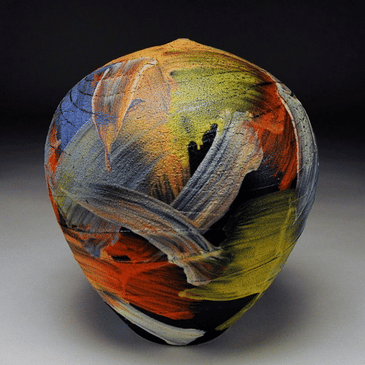
Today's Colour and Ceramics Podcast episode, features the vibrant Nick Benard from @nbernardpottery. Prepare for a whirlwind discussion with Bob @bobacton, as we dive into Nick's art, enveloped in mesmerizing colours and intricate surface designs. Spoiler, he's also got some killer tips on navigating the art world!
Operating from scenic Scottsdale, Arizona, Nick crafts breathtaking vessels that we're absolutely smitten with! Don't just take our word for it, hop over to his Instagram @nbernardpottery and let your eyes feast on his creations! Go a little further down the rabbit hole and explore at https://nbenard.com - you won't regret it!
[00:00:00] I try to be professional and I try not to do any drama, and if you say you're going to do something you do it, you need to live a period. On I'm Bob Acton and I'm pleased to share my conversation with Potter, Nick Bernard.
[00:00:17] His nickname says Form is everything. He essentially stretches clay to make canvases for decoration, texture, pattern and color are successful additions when the shapes are impeccable and neat as standard. His inspiration comes from the classic forms of antiquity to the simple graceful pots made
[00:00:40] by indigenous peoples in the work of modern studio potters. He uses dramatic color, graphic pattern and subtle texture to accentuate what he hopes is a mastery of the traditional vessel form, regardless of the clay's and firing, and he uses a couple.
[00:00:59] We also talk about making beautiful shapes, how he balances texture, form, and color, but also Nick gave us some great business advice. I hope you enjoy this episode with Nick and I'll see you on the other side.
[00:01:19] Welcome to Colour and Ceramics, the podcast for Ceramic Artists who want valuable ideas about using color from leading artists and world class experts. Here's your host, Bob Acton, a sculptor and ceramic artist who's fascinated with color and help potters, sculptors and artists use color in their work.
[00:01:39] Tuning is he talks with his guests about color, techniques, and the impact of color on people and art itself. Nick welcome to the Colour and Ceramics podcast. I'm really excited about you being here today. Thanks, Ravi. Yes, absolutely. I've loved your work for years.
[00:01:57] You're beautiful forms and the brilliant colors that you use. I really like to see a lot of the surface texture that you're moving on to the clay. Of course, I see that you worked with porcelain and stoneware and terracotta.
[00:02:14] You've worked with a variety of different kinds of clay. I love to chat about that and of course, your fabulous designs and colors. It's all really so great. Thank you. Yes, absolutely. I felt that the work represents years of hard work.
[00:02:31] I know that you've been at clay and pottery for a long time. Can you tell us a little bit about your journey and to you becoming the artist that you are here today? I started pretty much full time when I was 15.
[00:02:50] When I was really young, I lived in Los Angeles and we had ceramics in the school I was in which it was really fun. I was a little bit overactive, I would say. A big time athlete and super, super good strength, good eye hand coordination.
[00:03:10] A little bit too much energy as a teenager and a young teenager. Making pots was pretty fun and we moved to Connecticut in 1974. There was a ceramics class there, so I did that. One day I made something and I remember vividly as to what I made.
[00:03:27] I remember my head, I thought, this is really cool. I'm going to learn how to do this. That was probably when I was about 15 or 16. It was probably everybody out there knows about the Clay Arts Center in Portchester, New York.
[00:03:43] It's a very, very long time, quite famous community studio with classes and resident artists and members and that kind of thing. I happened to know that that was in Portchester right down the street from us. I became an apprentice to a potter.
[00:04:06] I learned how to make clay, I learned how to make glazes. I learned how to glaze stuff all in production setting. These guys were a little older than me and quite skilled. That's for a little bit. Then I went off to college and didn't like that much.
[00:04:29] That was up in New Hampshire. I found another potter to apprentice to up there. That was a little bit more in depth as far as studio work. Making clay, making glazes, glazing pots, helping do everything in the studio and up there
[00:04:50] you spend a lot of time, especially in the winter, cutting wood, moving wood. On so forth. After two years of that and being a California boy, having to feet be totally frozen for two winter is pretty much put a fork in that deal.
[00:05:09] I wanted to go and get a degree in ceramic somewhere. I don't know if anybody knows about the big giant barren's college books that they used to have. It's like a telephone book with every single college in the world. Anyway, I opened that up and there it was.
[00:05:24] There's on a state university. It has a BFA in ceramics. I applied and got in and I moved out here in 1978 and started working in the studio at ASU and graduated in 81. That's when I started my own studio.
[00:05:43] Over the years, I had a production company where I had as many as 10 employees. We used to do shows all over the country. We did a significant revenue but also significant expenses and that's kind of what I had never here.
[00:05:56] And basically, that went on for quite some time and after got to the point where the only person that was getting paid was the employees, the landlord, tax man, the accountant, and everyone's going to want to lawyer.
[00:06:13] I decided I was going to get a Jettison that helped crew and I built a studio behind my house in Scottsdale in 1989. This building started off as just a shell and now it's probably one of the premier private studios in the state, if not in everywhere.
[00:06:34] It's super comfortable, super efficient and it's sort of become a destination for collectors and students and art people. We have museum tours, we have ulcerate to stuff those on here. My wife's a sculptor and so she has her studio here so we do not in this building but
[00:06:56] on the rest somewhere else on the property. So it's an active place especially this time of year where it's our season. So Scottsdale in springtime is a pretty busy place. So we'll have lots of people coming through here over the next.
[00:07:12] I've just basically been working on my own since 1989 in this studio. No employees, no helpers, it gets kind of lonely so high chatters because I never talked to anybody. It's comfortable and it's a it's a it's get up every day, walk to the studio, do my thing
[00:07:32] and when I'm done and I start looking around going oh I don't want to do that, I don't want to do that, I don't want to do that, I walk over to the light switch, shut down and go in the house because it's going to be here tomorrow.
[00:07:44] So it's not a beautiful thing. Yeah, I like to say I'm always in the studio except for when I'm not. So if I'm in the zip code, I'm working seven days a week and I'd like to also say that at this
[00:07:57] point I'm trying to be semi retired which is only five to seven hours a day, seven days a week instead of 10 to 14 hours a day, seven days a week and that's sometimes works out most of the time and that's so much.
[00:08:13] So you've been you've touched on doing sort of an apprenticeship model when you started off and then went to school and then really were on your own running a business and so you've been an artist businessman for many years. Yes, yes. And I think I think that's really
[00:08:34] my dad was a businessman. So he helped me when he was alive and way back in the past, he helped me understand what it was to run a business, to have employees to have overhead and what you need to
[00:08:49] do in order to meet your expenses and actually produce the work and there's so much stuff that goes involved with with that aspect of it, that it's really more of a lifetime of just
[00:09:07] experience and doing it. And if you can get a little advice on it, it's nice but yeah, it's I try to be professional and I try not to do any drama and if you say you're going to do
[00:09:21] something you do it, you need to live a period. Yeah, like I hear you've gone from having a big production where you've got lots of employees and lots of things to attend to to really zoning
[00:09:34] in on what's been important to you, which has been making the art itself. Yeah, back when I had the production company, I did my own personal work a lot then and it sort of it was sort of helpful
[00:09:47] because in those days I did all the national shows, all the American craft council shows and then all the the gift markets for the production company work, which which I could I could manage
[00:10:01] all the all the freight and do all the and I had help to manage those shows a little bit more that kind of business has gone away but it was it was good to be able to do both my personal work
[00:10:17] and the production company because you go out in the road and you do, D show's kind of concurrently or back to back and it made it a little bit more affordable. And challenging too I can imagine.
[00:10:36] Oh yeah, I mean I look back at that and go what the hell man? That was just nuts but then again you know, if I was young and strong which I was it made it not so bad. It was fun. You get to see people
[00:10:53] and get to see a lot of new work and lots of people that are really I'm still friends with from all those years ago and now with social media you can connect back with people that
[00:11:04] you spent spending time with on the road so that's that's kind of fun now. Yeah, that's very cool. Now, you know, you've been working with clay for years had all these experiences that we've
[00:11:15] talked about and I'm really interested in what inspires artists and so in the context of your art what continues to motivate you? What do you get excited about? What get you out of bed in the morning?
[00:11:31] I want to finish. I want to finish what I started so if I make pots today I need to I need to trim them tomorrow and then they're going to get inspired or they're going to get
[00:11:44] texture or they're going to do whatever what ever needs to get done to them. And kind of the goal I think is just to finish and to execute stuff you know hopefully how to make things how I want
[00:12:03] to look and as you move through a period of time or a career things just evolve and more and your techniques change and you see something and you do a little different and so you just keep
[00:12:19] you just keep changing. So there's days when I'm not so excited and there's other days where I can't wait to get out here but it all just depends on what I'm working on at the time and
[00:12:31] it's there's a lot of things to do and sometimes there's just too many things to do and there's little things that just make you crazy that you know you have to attend to.
[00:12:46] So it breaks up your focus in your time but pretty much I'm pretty good getting up and getting out here and doing my thing every day. Yeah there was a period of time when I was running
[00:12:57] and I remember having motivational difficulties getting out on the roads some days and I read a runner's magazine about this guy who was you know a famous runner he put his running shoes right
[00:13:13] by his bed so that when his legs swung out in the morning they'd go into his runners and he'd be able to get out the door. He didn't have any opportunity to find something else to do and it sounds
[00:13:26] like you do something similar but in the art world you come out of your house and you're in this studio doesn't matter what's going on. Yeah it's you can either sit around and drink coffee
[00:13:38] which is kind of boring and or you can get out and take care of business so there's when when I have work to ship you know that's sort of a non creative but a good, a good busy work
[00:13:54] thing to do and there's just you know and when you make work I believe that nothing is especially in this day and age nothing is nothing even exists until it has a professional photograph
[00:14:09] of it and it's sitting on your website or in your in your archives so you can present it and it's at your fingertips same thing with your resume and you're excuse me are to statement all
[00:14:22] that stuff needs to be done so especially the photographs because over the years I've always run into people say they say oh what do you do oh I'm a diss I'm a that I make this I make that I say
[00:14:34] what you have any pictures and they say no well then that work doesn't exist so finishing finishing and then and then documenting is is really extraordinarily important because you can make pots all
[00:14:49] day and you can tell me how wonderful they are or you know make videos of you doing work works and progress which doesn't really do anything because it's not finished I mean the piece can can crack
[00:15:03] it can break it can blow up you know is what can happen but to finish and document it and then have it available to either send to a client put on your website put it on Instagram
[00:15:15] send it to other clients whatever whatever it is that's that's really I guess the goal every day is to finish and to present it. What a great, what a great message to send to other artists
[00:15:29] because I think that's really important as well is to have that sense of finishing and that ends the piece and then you can move on to something else. Yeah and yeah I'll always say you know good
[00:15:41] batter and different whether that piece that you just finished it's a product of all the working done and then and again whether it's good batter and different it's done and you take a picture of it
[00:15:55] even if it's horrible but it's part of your it's part of your record and you may not be you may not show it to anybody and may go in the garbage but you know what you did and it's and
[00:16:07] it's there's a record of it and so taking a good professional picture of everything and then I have a huge book that I have I've printed out you know if I shoot 20 pieces six pieces 40 pieces
[00:16:23] I print those pieces out I bring them up I bring those papers out the studio and measure them and if they're going to go on the website I put that price down on there make sure that I know
[00:16:32] how much it is and that it's been published and but it's done and then you can move on to the next step. Great great idea you know I was when I was doing a little bit of research about
[00:16:47] two I read a quote from you in the Phoenix magazine which said you said it's all about the structure you can add all this color and texture but if you make crummy pots you're just putting
[00:17:02] a two-two on a poodle it's not a dancer it's still a dog. I love that I love that going out so basically that's and that's where all this stuff starts it's all about making beautiful shapes and I love abstract
[00:17:18] form and I like I like real crusty funky but there's there's certain things for me that works that work visually and aesthetically and then there's there's stuff that doesn't but my family had always had ceramics and and a museum catalogs in their home so
[00:17:48] in ours exposed it as a really young age to like this catalog from the LA County Museum they had a Japanese wood guess it was a teapot show or a raccoon show or something and these pots are wood
[00:18:01] fired pots and they were the crustiest, gnarly things you've ever seen and I loved them and if I could make stuff like that today I'd do it in heartbeat but that's not where I what I do or
[00:18:10] where I'm at you know I have the facility for but I mean that kind of stuff just I like it a lot but that's not what I do but when it's right it's you can tell it's right the same thing with
[00:18:22] everybody else's work. Now form is really the basis of everything that we do isn't it? Yeah good good pots are good pots you know beautiful lines beautiful just just beautiful clean
[00:18:37] clean form and then you can then you can fix it up you can you can put texture on it you can you know make it make it funky but if there's if there's a great it's like building a it's
[00:18:47] like a house with good bones I guess you'd they said take all it so if you have if you have good bones you can do a lot of stuff with good bones. Yeah absolutely you put a lot of color and
[00:18:58] texture on your work how do you balance the use of color with with these other elements of design like form and texture in your pieces? The pots for the most part sort of dictate the texture
[00:19:13] that I'm going to do and and there's days when I can't actually do some of the textures my hand won't move properly. I mean it's not there's no physical defect is to you know for some
[00:19:28] reason I can't I can't get it to do what I want so I do something else and try to make that work on the shape and so certain certain textures work work nicely on on certain pots, certain colors
[00:19:41] work nicely on certain pots and certain textures. And then the way you put all that color down and if we're talking about the earthenware there are the layers just layers upon layers of
[00:19:52] sprayed color and if you go on the website you can see some vintage stuff and that's layers and layers of brush color and so it's sort of it it it it it's all kind of based on the pattern and what's
[00:20:07] worked in the past because this is this is this is everything's here's one of a kind but it's not because it's all a series of you know a 10 year series so as I get better with with application
[00:20:21] of color and tweaking other other aspects of of making things you they change and so it you just got to look at it and figure out what you're going to do with it you know some
[00:20:38] tases look great plain just straight vivid blue done great easy and then the rest of it has has other you know another another another another another another future let's say and sometimes if I fire glazing fire things as many as five or six times to build up texture
[00:21:03] especially recently building up lots of texture and color on and depth of color on these and texture on these earthenware pots the the person's something different that's just graphic pattern and on real clean form but that's the the the decoration and the and the glazing on that is
[00:21:23] super super um uh it's tight and and needs to really um it's technically challenging let's put it that way whereas the other parts a little easier I guess you know I think that when you are
[00:21:40] standing and looking at a piece that you're finishing and applying either texture or color I'm sure it's an intuitive process that you have to decide whether you want to add more color
[00:21:53] different color more texture could you describe for people how you think about that yeah on the earthenware and that's I think what we're talking about mostly is is there are somewhere the textures already set
[00:22:05] so those pots get made today and then the texture goes on tomorrow and then they dry and then all the color work is done green so I start um I those pieces are sitting out there waiting for
[00:22:17] another a bunch of you know soldiers in a line and I I just got there with with my spray guns and say okay you know what's gonna go you know what are you gonna do and just start you just mix it up
[00:22:32] and take take some color out there and start moving stuff around and and there's times when I know I need to make pretty pots or there's other times when I I don't have any agenda and I just do some
[00:22:46] experiments change up the layering thicker thinner any number of different different variations but it is real intuitive I try not to think too much about it except for the actual technical aspect of putting color down and the thickness that comes out of a spray gun and
[00:23:16] and what what has worked in the past so you know there's certain combinations that you don't use because they're ugly but there's plenty of things that that habit comes on and plenty of techniques
[00:23:30] that if you see something that you did almost by accident and it looks cool on even if it's a orange square piece of a pot the rest of it is ugly you know go ahead and
[00:23:44] start squirting glaze at that and so that's why making pots on a potters will is so effective because you can have a lot of bodies and so the bodies are there to decorate and slots
[00:23:57] people just throw pots while there's no point in throwing pots again if you're going back to the very first thing we said if you don't finish them so I make lots of I have lots of lots of
[00:24:12] lots of people to work on all the time and that's also a way to keep yourself producing and and functioning daily if you have work to finish absolutely that's that's some of the excitement I hear in your voice about the work itself right it's applying the color
[00:24:34] to the piece and seeing what comes out of the kiln yeah and at this point I'm doing a lot of experimental stuff where I have no clue none whatsoever as to what's going to happen and if you
[00:24:48] went out to my Instagram page today it sees you know or in the last week it's see three or four in pieces that it are literally completely and totally unplanned I have no idea what they're going
[00:25:04] to do and it's working but the only reason why it's working is because I know when to quit and I know when to keep going at this point I can kind of I can kind of feel it and so I don't I think all
[00:25:21] this all the intuitive part and all the all the rest of it is just comes from year yeah all this experience you know hundreds hundreds thousands of pieces and hundreds and hundreds of hours
[00:25:34] of putting color down in in in a number of different ways and handling the materials to get where you want to go lots of practice yeah absolutely now you've talked about laying down color and glaze can you tell us a little bit about your technique or you're using
[00:25:54] slips or glazes or under glazes or since I think we're talking about the earthenware again it's it's a formula that I literally took out a series monthly that was a Eva quang and Kurt
[00:26:07] Magnus long wide ranging slip I think it's in a 1989 issue and it's a super simple swarfiving ingredients and the reason I use the ben is number one simple to make and it's cheap
[00:26:25] because if you if you use all these fancy materials and in in in these when these colors you can get you know it's extraordinary expensive and especially when you're when you have no clues to what you're doing you need you need to have something that's that's a pretty
[00:26:44] pretty easy and affordable to make but that original formula has morphed into a variety of different things and then I use a lot of Mason color straight out of the bag from the supplier
[00:26:58] in a percentage in a base slip which is that mangas quang base and I've adjusted it over years because it's more more more related to a high fire white white slip versus what I
[00:27:13] using on the low fire cone 04 so it's been for it it's been this it's been back and you just keep you know mucking with it until it's you get and there's certain you keep adjusting it until you get
[00:27:29] they all do the same thing at the same temperature even though some of the additions are different so some of them have a little bit more additional frit than others some use less colorant
[00:27:42] and more oxide because there's certain things that are our fluxes like copper oxide copper carb or cedar copper oxide is a flux so you don't need to put as much frit into a base if you're
[00:27:54] going to make a black slip but that's also this is also something that got developed over about 10 years and it's still it's still getting picked up picked apart but mostly I don't really
[00:28:10] change it anymore and I just work with what I have and what works and then you can have a lot of freedom to just let it rip with with either a brush or spray guns or dunking or dipping or
[00:28:23] however you're going to do it to get color on there sounds like that you've moved from using a brush a lot to spray yeah and it's funny because people kind of look at your sideways and see oh I
[00:28:37] spray all these colors well it's actually harder than brushing stuff so and especially when you have when you're doing all your work on green or it's the control of of the equipment and the
[00:28:56] you know having and then having the proper equipment is super important and just you know just putting putting the stuff down in the proper thickness and the slip this slip is sort of a water
[00:29:11] in a sense because anything that you put on underneath something else affects the color so it's you know if you put yellow and top of blue you can green and vice you know and on and on and on
[00:29:26] all you all the stuff you learn in school about color so with with these colors whether you their brush or spray that's that's what you get and so it makes it really interesting as to
[00:29:40] what does happen when when things get fired yeah that sounds very interesting so do you single fire or is it you fire and then add a like a clear glaze or earthen earthen workouts and since they're
[00:29:57] not they're not bitrious they're not glazed on the inside most they're all close forms anyway and pretty much I make them I make these round round pieces or pieces with nexonum for the most part
[00:30:11] with with these very close forms today are not functional items there they're objects there's there's there have no they have no illusion to function there if you can get a here down the holes in the
[00:30:22] top of them for of these bottles and well more power to you but I'm it's pots to be objects whether extensions tall six inches wide or 24 inches tall and 24 inches wide there objects they have nothing to
[00:30:38] do with function and they're just forming space with color I like that that frees us up in that context isn't it hey when people are looking at your work because I think that art doesn't end with the finishing
[00:30:57] of the piece in our studio the art continues on into the the eyes and the heart of the person looking at your work or touching our work what what how do you think the choice of color influences
[00:31:13] the overall mood or message of your work I think some of them are are kind of dark and birdy and some of them are you know bright and cheery and it's really it it just depends on how you
[00:31:33] put it down and and and what what choices you make I don't really think about it I mean I'm doing stuff right some some things right now that are really really dark and birdy
[00:31:47] has nothing to do with my mind's mind frame or you know how I feel about pots it's just I like I like the black with with us you know crusty black with some white running through it or
[00:32:03] I mean it's I don't really don't really I don't really think about it I've always thought too that if I make good pots if I make beautiful work people will respond to it and so again you make you make great
[00:32:22] pots you do beautiful decoration you present it well and and I don't have a big wrap to go with it it's I just I make I make the work because I want to no one tells me what what to do when to do it how to
[00:32:41] and so if I'm happy with it most mostly everybody else is pretty um birdy on board and sometimes people don't they have no clue as to what what this work is so that's fine
[00:32:57] and you try to educate them a little bit I used to do shows with my work from from the 2000s and it was very it was very organic with lots of curly handles and stuff and people thought
[00:33:08] they looked like they were gourds they were they were vegetables they were paper mache and I made these teapots out of out of earth andware and they have you know these these
[00:33:21] real interesting textures and colors on and people would and I put it right in front of their face in an in a booth at eye level and it says Nick Bernard ceramics and people would still ask me
[00:33:33] does this is this teapot paper is it what is metal it's like you know basically if you look at the work it's it's you know there's really pretty much only three things that it could be and really
[00:33:47] there's really only one proper gas otherwise you know you you've been living in a hole for your entire entire life but you know try to be patient and and tell people what it is you're doing
[00:33:59] and if they don't understand that that's fine but I just do it for myself I have no gender with anybody else yeah and of course it is true that people respond to this work in different ways
[00:34:12] like you're just describing somebody might like one of your pieces and they might not like another one and sometimes it's very hard for them to even figure out why they like one piece versus another
[00:34:24] yeah and I think a lot of it has to do with who of course who's looking at it what their level of education is where they've been what they've done their age you know people who've been
[00:34:39] around a while people who've traveled people who have had a significant amount of education and are interested in culture and history and they get it because they've done their own work and they've been places and they've seen stuff so it's you know people that don't have any
[00:34:59] experience have no clue and that's fine they need to either get an education or work or work at it if they're interested in learning about it because nothing nothing nothing that comes
[00:35:13] cheap it's a lot of even learning about ceramics or art in general so a lot of work it's a hard work I agree and what kind of challenges have you had in working with color and
[00:35:27] surface design sometimes stuff is just ugly you got it but you got to do it you got to do everything every single thing that you make has a reason to be made because and if you do it then you finish it
[00:35:46] and if it looks stupid when it's done well try not to do that again you know try not to use try it I have I grew up in Los Angeles and a bunch of my buddies or doctors at this point
[00:35:58] yeah they're at now they're all retired doctors but one of my favorite my favorite things was like down in Mexico with my friends on the surf trip and and I pop my shoulder paddling into a
[00:36:10] wave and I could hear it and I kind of struggled into the beach and my friend who's a surgeon came in and I said Eric you got any pain meds and he said well before I give you any pain medication
[00:36:22] I need to do you need to do a test and so he said well hold up your arm he says that hurt he said there's a there's a hurt when you when you put it to the side and he said yes he said don't do that again
[00:36:33] take this so basically try try to limit your mistakes and if you're if you're not paying attention you'll make more more mistakes than than you need to and so attention to detail is is
[00:36:51] is super important with what this work even if it looks a little funky it's it's meant to look funky it's you know the surfaces and the shapes can be extraordinarily cachi as far as being
[00:37:11] a little bit better so if you take if you take a half inch off the base of a piece make it stand up a little bit more it's super it's a lot more elegant but if you're not paying
[00:37:19] attention to that then you're gonna make a bunch of you know short dumpy pots same thing with the shapes at the top of the piece how you know how does that form finish off are the curves or the
[00:37:33] curves right um is it flat is it has square shoulder does it have a you know flat space or Ripley spaces when you're trying to make a big fat round pot well you got to pay attention
[00:37:45] and that that bit me one time you know years back where it was making all these little pieces and I looked out on when they were done it's like that's not round it's horrible what are you going to do
[00:37:58] about that so basically you're gonna pay more attention and never forgot that lesson it is so true you have to pay attention I know I do sculpture work and one day I had a piece sitting up on a stand
[00:38:11] and I happened to sit down in a chair in my studio and I looked up at the piece so now I'm looking up at it and saw pieces underneath there of part of it underneath of it that I went oh
[00:38:24] wow is that ever ugly but had I not spent the time looking up almost from the floor I never would have seen that and so I hear you a big time about being attending to the details and taking your time with pieces
[00:38:40] yeah and and the other thing is just just because you made it and you finished it doesn't mean that it's any good I mean I got so so much so much stuff that I've made over the years that
[00:38:54] there's there's nothing wrong with it it's just not very good so you know what do you do with that I have studio sale I sell I sell I sell everything I make or try to but there's there's work sitting
[00:39:06] out in my studio sale on my patio and it's really nicely displayed it's well lit but it's outside it's not inside and it's important part of my business and the work is all viable it's just not as
[00:39:19] good as it needs to be for me to sell it at retail and there's a lot of experimental stuff out there and things that didn't quite work very few seconds but mostly stuff that's just
[00:39:32] doesn't go with it doesn't go with the program and it was not meant to be part of the program was an experiment or it was a test and but people put it and and it's a real important part of my
[00:39:45] income but it didn't meet your standard yeah so nothing leaves this building especially to the galleries that's not absolutely impeccable and every every single thing that goes out the door
[00:40:00] has a photograph that goes with it you know in the in the in the size and and and resolution that they requested you know professional invoice blah blah blah all that stuff because there's plenty more way
[00:40:14] more talent to people than me out there but the people I work with they like it because I provide them with an easy way to show on sell the work yeah it's really important to on the business side
[00:40:29] to have that professionalism which is what I what I would describe what you're doing in terms of the delivery being reliable having all the processes in place like how do you do invoices
[00:40:41] in a manner that really works with your customers yeah I it's it's it's uh I have I have some some of my my customers the galleries and I mean they just they just thanked me
[00:40:56] for providing them a drama free and an easy for them experience you know packaging because I I'm shaking pots all over the planet I'm taking round, round, fragile objects and putting them in a
[00:41:13] package and in a you know square box and sending them via FedEx so it's all new packaging everything's brand new and it's clean and it's uh and it's uh sound and and it works and
[00:41:32] and I don't lose any work so you lose you send up a thousand dollars worth of work to a place and you lose one piece that's pretty much you know makes the whole deal
[00:41:45] pathetic and worthless so not losing any work in freight not losing work to private customers is even more important because you're out that work and boy you got to pay them back and you lost the
[00:42:00] piece to boot so making your your shipping shipping and preparation for that is super important yeah it doesn't just end when you pull something out of a kill no no that's that it doesn't exist
[00:42:21] it doesn't exist until you take a picture of it and uh and uh do all that and it still doesn't exist until someone sees it and then you know either either stays here and gets sold in studio or
[00:42:34] goes to gallery or someone buys it off the website or however our work but absolutely hey appreciate our time we're kind of coming to the end here but I wonder if you had any advice
[00:42:49] I mean you've given our listeners lots of ideas here today but I wonder if you have any specific advice for a young ceramic artist who's just starting to develop their own style work as much as he
[00:43:06] possibly can show up get it done I just gotta do all the work all of it all of it every single aspect of it you know from a ABCDE all the way through you can't start at a and skip to D you got to do everything
[00:43:30] and you then you're probably gonna have to back up so you gotta do all the work all of it all of it there's there's no and have and I know they're teaching in college these days
[00:43:46] because I have some people that that I do a little tiny tiny bit of mentoring with who are graduate students or work graduate students and basically they're teaching people how to have a rap
[00:43:59] you know it had a whole bunch of verbidgen and you know explanation of their work all right well great but I want to see the work I don't want to hear all this nonsense about
[00:44:11] about all of your your uh your influences and your this and you're that and your you know show me show me good work and show me a body of work and show me a professional presentation
[00:44:29] that's because all the rest of it is just nonsense it's just complete in total nonsense because you gotta have the work yep right here yeah and that's what people appreciate they are buying
[00:44:42] the work not the explanation of the work yeah and there's there's there's so much there's so much chatter and so little work and you look at stuff and there's there's time soon if you
[00:44:57] you know there's a perfect example we went to an artist talk in one of the local museums and this person was really trying to pull the wool over my eyes and someone called her
[00:45:13] called her on it and yeah it was sort of embarrassing for them because the work was was not great and there was a bunch of jive to go with it verbally and I didn't buy it no one else did so
[00:45:31] lose lose the jive and make the work yep great great advice hey absolutely hey Nick thanks so much for spending some time with us today here i think you've given people some great ideas about
[00:45:46] how to produce some good work how to work in series and finish the work and understand deeply that it's not just as we said pulling it out of the kiln it involves a whole process from
[00:46:01] putting your hands on the clay to shipping it and having the client receive it so it's it's it's a lot of times worth you never done yeah absolutely hey thanks a lot okay thank you