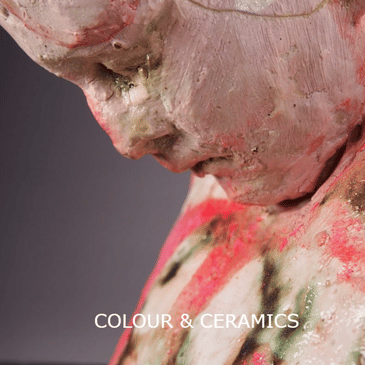
Sharon is highly recognized contemporary sculptor in the UK. Bob and Sharon talked about the interplay between form, colour, and surface design.
Sharon can be found here:
Web: https://www.sharongriffinart.com/
Instagram: https://www.instagram.com/sharongriffinart/
Sharon also mentioned Magdalena Grozsek, a colorist, who operates the BeARtz space in France operating workshops and retreats.
Magdalena can be found here:
Web: https://be-artz.com/
[00:00:00] I'm really drawn to pinks and like, discreet pinks with greens because they're beautiful together. Really beautiful, just a pop of green in a pink sculpture on a painting, a double painting, top of green on a pink painting is just delicious. Welcome to the Colour and Ceramics podcast.
[00:00:23] I'm Bob Acton and I'm here today with the great Sharon Griffin. Sharon is a figurative artist from England who specializes in ceramic sculpture, directly inspired by the woodland where she often explores places in which to breathe.
[00:00:38] The textures, the smells and the secret spaces from the forest all provide a kind of awakening for her. She uses the human figure to help communicate a sense of deeper meaning within humankind and of her own experience of being a woman.
[00:00:56] The sculptures represent a state of being in turnal struggles of love, loss, displacement, vulnerability and strength. Sharon and I talked about Colour, surface design, form, and how she approaches her work. I think you'll really enjoy her ideas about clay and the artistic process.
[00:01:19] Welcome to Colour and Ceramics, the podcast for Ceramic Artists who want valuable ideas about using Colour from leading artists and world class experts. Here's your host Bob Acton, a sculptor and ceramic artist who's fascinated with Colour and help otters sculptors and artists use Colour in their work.
[00:01:40] Tuning is he talks with his guests about Colour, techniques, and the impact of Colour on people and art itself. Sharon, thank you so much for being here today. I am pumped about talking with you about Colour and surface design and connecting with you from afar.
[00:01:58] You're over in England, and I'm here in Western Canada, and so it's great to be able to have these methods where we can have a conversation and share it with everybody else.
[00:02:09] As I had mentioned to you before we started this recording, I just really love your work and I love the... I was thinking of what I would call it. I kind of call it your loose nature, I guess, about some of your sculptures, you know?
[00:02:26] It's not really tight as I might call it. It's nice and loose, and I love that. I love the colors that you're playing with although a lot of the colors are white and some accent color.
[00:02:40] So I want to talk about that, but so thanks so much for being on our podcast here today. Thank you for having me. It's really pretty. It's absolutely my pleasure to be on here, Bob. It's brilliant.
[00:02:52] Could you tell me, I know a little bit about you, but I don't know if everybody else does.
[00:02:59] So I wonder if you could tell people just a little bit about you and your work, like where you started and it gives us the short story of how you got to where you are right today. Okay, long story, but short version. That's what we want, isn't it?
[00:03:15] Let's keep it, you know, three words rather than 300. I'm Sharon, known as Sharon Griffin, but actually born Sharon Massey always lived in Telford in UK.
[00:03:25] One of 11 people, so 11 siblings, all from different parents, different backgrounds, came through into art because I struggled at school with the formal sitting down, you know, kind of thing where a lot of children do. I'm fortunate.
[00:03:46] And since my parents both passed away, I've kind of used my home town of Oslo, Dentalford, my home tenors, like a trampoline to go and visit other experiences and other cultures art is where I can find freedom to express and to be and to explore.
[00:04:05] And as a place to breathe and really into the body and you know, reconnect with myself and with my emotions and my feelings and kind of make sense of myself but not just of myself, but, you know, everyone else in it or in my world.
[00:04:21] So if I can, if I can make sense of myself, it means that I can make sense of my conversation with other people with my family, with my friends, with my community, with my town, with my, you know, with my art world.
[00:04:34] So then, keep an eye on it. When I went into teaching, I didn't do so well at college or university, I scraped through and managed to become a teacher in a college in F.E.
[00:04:47] And reconnected with young people, really liked working with young people in college, especially the naughty ones, all the ones that are labeled naughty. I kind of thought, I recognize that. I don't think it.
[00:05:02] My work is about finding freedom and I think because of always worked all been interested in psychology and in teaching and how people behave. I've always made figures and pay is an instant instant instant thing that it just gives me the dopamine fix that my brain needs.
[00:05:21] Is that making such short enough? Oh, that's perfect. Yes, I can really relate to what you're talking about. My background was I was a psychologist and, you know, lots of times psychology, at least in the profession as I knew it, was really full of lots of rules.
[00:05:39] You know, you must be this way or not do it that way. And this is the right way and this is the wrong way. And, and so when I got into ceramics it came out of a, I don't know where it came from.
[00:05:51] It was sort of a visceral thing at the university when I just fell in love with it. And then now that I'm doing some sculpture work, it is free. It gets your fingers dirty into the clay and you never know sometimes what it emerges.
[00:06:07] It's a body experience, isn't it? You know, I paint and I sculpt and I'm just cutting up some textiles at the moment, which as well as a bit late to this podcast actually. We're working with some with refugees and we're just doing some some like,
[00:06:25] Some playing with the materials just very short things, but you know when you when you're using your hands or you're using we talked early about music as well expressing the body. With clay in particular, you can see it.
[00:06:40] It's there's nothing in between us the material is a mirror to you, isn't it? It picks up every feeling, every emotion, every, every mark. It shows you whether you are full of energy and like really fast.
[00:06:58] You know, you've got all this stuff to come out and say, you know, when your hands can't stop moving or it picks up your anxiety or your
[00:07:06] tiredness, it picks up everything and there's no, there's no tool in between you the clay because it's your hands that you're using. It's this haptic knowledge, you know, the experience of this knowledge of the body that you're using which is really quite intimate isn't it?
[00:07:22] It's a very intimate and as you said, we can use tools, of course, but often it's our it's our skin that's touching the clay. And so and so it's we're so intimately connected with the with the piece. Yeah, absolutely, absolutely.
[00:07:42] And then that piece of you know, clay is so it's ancient knowledge. So we're drawing on that like ancestral kind of knowledge that has been passed through one with us and our ancestors as well.
[00:07:56] So when you have that time with the clay, it's a really it like you say it's not just a it's not just a physical space. It's a liminal space where it allows the mind to then wonder and make make space for your thoughts to just wonder.
[00:08:12] So yeah, I love it. I love it. I think all people should get their hands on some clay at some point if they haven't already. Absolutely. I have a friend who's just starting clay class and I think she'll love it.
[00:08:25] I'm honestly. So we're talking about touching clay and of course that means we are making a form of some sort, right?
[00:08:35] So when you start off the joke, at least in my world was well, we made an astray that was what we started to do when we may started play first because we couldn't do anything.
[00:08:45] And then eventually you get much better at whether you're throwing or whether you're sculpting at making the form. And I remember in my first instructor said Bob, the form is most important. And here we are talking about color and surface and I think they're both important, right?
[00:09:05] You if you have not a very good form, this matter how much color you put on it or a surface on it, it's not going to do so well. Vice versa. Can you talk a little bit about your thinking about form and color surface?
[00:09:22] So I mean for me, I need to analyze what form is form is a shape, it's it's making a physical three dimensional object which has got surfaces on or that and planes.
[00:09:39] And it can be a heavy, weighty form where it can be a very light elongated, elegant form.
[00:09:48] It can have things that go inside. So it's an object, isn't it? It's a three dimensional form that you can say the human body, this human experience that we're in, can have a relationship with it.
[00:10:02] So that's kind of a physical language that is not verbal language or said, you know, listen to an order, you know, your beliefs into this podcast at the moment.
[00:10:11] So you're listening to the tones of voices and the expressiveness in our language and the way that we are stringing sentences and words together. So for me, form is about realising all of that language that is non verbal but into a three dimensional object.
[00:10:33] So as a figurative artist, because you know that's not fast, that's a vast thing isn't it? It's huge. We've got forms everywhere that in our homes, everything that we touch and have a relationship with, you know, beds, cups, just looking around my room now, you know, things that windows will look through this so many different forms everywhere all over the place.
[00:10:57] So it's too much for migraine to cope with. So I have to just keep it down into this form that I can use and for me is all about the human form, it's all about the face and the body and the shoulders and the way that the human shape is formed does that make sense.
[00:11:20] Absolutely. So that's like the tunnel, the tunnel vision. Yeah. And then because of that, because I'm a figurative sculptor, you know, who uses clay, clay has also got so many variables to it.
[00:11:35] So you start off with this wet wet gooey sort of substance and then it has a, you know, language of its own. So then it goes through these processes it in its two dry or two wet if it's too wet it'll fall over.
[00:11:50] If it's too thick, it will blow up in a kill and if we fly in it. It you have to understand the the material that we're using. So so that material then goes on and has a life on its own.
[00:12:04] And you know, we start off by just approaching it and making the sculpture using clay that is more to ball and it's just a white consistency.
[00:12:14] And then it dries and then it, you know, you can then scrape it back or work with it when it's dry or leather hard stage or then you then it goes into the kill and then becomes flattened and the surface becomes dead because all the molecules of vitrified, you know, squish together.
[00:12:32] And then, you know, if you want to add anything more and you can't do that it's got this whole other world.
[00:12:39] Oh, it's it's vast, it's huge, almost going off an attention. So bring it back in to the form. The form is quite important for me because I want to keep it alive.
[00:12:52] And I want to work with the clay so that it has a language of it sound. So when I'm having a conversation with you Bob hopefully I'll pause and then you can have a, you know, you can feedback and what I just said and it's a two way conversation.
[00:13:07] And it's the same thing with clay, so I'll have a conversation in my workshop with the form of the clay initially. Sometimes I actually have a verbal conversation with the, do you do that? I dance to it.
[00:13:25] I dance to it. A thing to it, a cry at it. It has all of my secrets. Yes, it's everything. It's alive in lots of ways. It's, it's mud, it's clay, it's it's, it's got organic material in it.
[00:13:42] But, but it has, as you said, a life of its own. So we create this form that we're happy with and we all do that in a different kind of way. Some of us are looser and have a life and some are really tight and make things precise.
[00:14:00] And, and then, and that comes out of who you are, right? That comes out of what's important for you and as our listeners are thinking about it.
[00:14:10] The thing that's probably most important for them to follow is their heart. What, what things bring them alive when they're making the peace. And then we have to cover it in some way. We don't just leave often, I guess some of us do but I know you don't.
[00:14:27] I leave it just as a piece of clay that's come out of the kiln. You finish it and lots of ways to tell us a little bit about how you finish your work.
[00:14:39] So, just going back a couple of steps. You mentioned that clay is alive, you know, it is, it is made of organic matter.
[00:14:47] And me, clay is the earth. We have it's really important for me that clay is part of my work because it's in where I live. I'm going to dig it up out of the ground physically.
[00:15:00] So it's a reconnection with the place, it's myself and the where I live. So it's a real deep deeper deep connection to our beautiful planet that we live on, you know, in an unwe're part of clay is found on Mars.
[00:15:16] But it's also in our mobile phones, it's everywhere. It's incredible. It's, it's, it's the life force of all the seeds and it's protecting all of the seeds that we have.
[00:15:29] And if we, if we don't have clay, we don't have anything, it is organic matter. We are it, it is of, I believe. So that language that visual language that we talk about sometimes is very, very energetic and very exciting.
[00:15:45] You know, and when I'm, and it's, so if I'm very, if I'm feeling very energetic and I've got something to say or something's going on in the world that I just can't get out of my head or if I absorb it through the news, which is not news.
[00:15:58] It's, it's a version of a story that someone wants to tell us. I'm trying to filter that out and really get deep into the, what is it this clay is going to tell me.
[00:16:09] And what is it that I'm having a conversation about? So it's real deep stuff. It's not kind of surface sometimes it is. And because, because I've experienced trauma, really deep, deep stuff that we're not going to go into, that's not that kind of compost.
[00:16:25] I know that the viewers or the people who are listening will understand what trauma is if they've experienced it and hope that people don't experience it too bad and they're able to deal with it.
[00:16:37] But, to me, the clay is about story and it's about really opening up the heart and really revealing what is inside of me, for instance, it's very kind of personal stuff. Sometimes it's a bit too dark.
[00:16:55] I think, oh, let's just scrape that bit back a bit and make it a little bit happier so it's a bit more acceptable to release out into the world. And I don't share everything. Let's just put that note down there. Yeah, yeah.
[00:17:08] So when we're making the form, we can reveal what it is that we have, the energy that's in there where there is light dark, happy side, everything in between.
[00:17:19] And we can scrape it back. So the act of scraping back is actually revealing the more of the clay surface. And I, once I've done that, once I've finished the form, it's not necessarily then I go on to the surfaces and look at the color.
[00:17:39] It sort of grows with it. So it's an organic way. I sit with the piece for a while and I think, well, what kind of conversation have we just had? I make some notes. I'm very inspired by the landscape around here. It's very green.
[00:17:56] Very, very rainy at the moment. And I love rain and I love green things. It makes us grow and we can eat plants and all that sort of.
[00:18:06] So I think about the colours that are coming through into that piece. You know, is it a very dark thing that I make in? Does it need more dark to it?
[00:18:15] Or does it need to have some pops of light? And then what do those pops of light do? You know, why they? Are they very, very vibrant or are they so I'm asking lots of questions basically. I'm asking the clay, what do you want to be?
[00:18:33] I will draw and sketch. I will look at colours. I always, I'm inspired by painters. I love the work of Jenny Savel. I think she's fantastic British painter just because she reveals the expressive quality of human nature.
[00:18:54] You know, I'm very inspired by an artist called Pierre Scott who paints the landscape from memory. And it's very exciting, very fast, very gestural, markmaking and then not landscapes, but they're kind of absorbed in landscapes.
[00:19:13] Very excited by those. So I then I paint on 2D and you know, in pastels or draw sketch. And then look at my sketchbooks and they have some clay sculpture then gets inspired by those drawings as paintings.
[00:19:34] And I refer to them as well as a bit of psychology, you know, we need a bit of drama in our lives. Don't we? We need to look at the shadow to get to the light, you know, if we are not here with there was the wood, we know shadow.
[00:19:47] I guess I hear you talking about the process of making the vase and the process of applying whatever surface you decide to put on it is really very much a thoughtful emotional process.
[00:20:03] And what's popping into my head is that I was going back to when I started taking clay stuff first years ago.
[00:20:10] And you know, they would teach you how to make a thing and say okay now it's out of the kill. Now you plot it in the glaze and hope it turns out okay.
[00:20:18] And so there wasn't much was almost done emotional connection to the piece at that level right? And so I'm going to hear you talking about something much much deeper that you are integrating.
[00:20:33] Not only your soul into the piece, but also the work of others and being inspired by different mediums. I did, I did train in ceramics and I was always really really disappointed when it came at the kill.
[00:20:52] Oh, no, it looks really completely different. That's not how I imagined it. You know, there's shiny glaze that would just go on it.
[00:20:58] Obviously, I didn't do it to an extent or level that other potters do where you know the clay is really well matched the glaze and it's applied in a way that it is.
[00:21:13] It is beautiful and it's almost like a piece of poetry, you know, and then it comes out of the kill using they maybe it's not an electric kiln it's a gas kiln or a anagama firing or a you know something really beautiful.
[00:21:28] So I didn't do it to that extent. When I was at university, I spray painted all of my all of my pieces with cast spray paint and then put them in the smoke firing. That was you know that was probably an extent of my glazing.
[00:21:44] But now when I stopped teaching about 10 years ago and then over the past 10 years I've been really developing my own technique or approach into the surface of the clay. As a as a fine artist would rather than a potter.
[00:22:03] And I think that's the difference between making pottery and ceramics and fine art sculpture. But using the clay as a as a fired surface. So I think maybe I'm like the bridge or the link to the bit you know the liminal space in between.
[00:22:23] The potters and crafts and final sculptors. So there's no rules. I can do what the hell I like. So you can spray carpet on it if you wish. Do everyone absolutely.
[00:22:38] Can you tell us a little bit about your technique, your surface that how you choose what you're going to put on the form. Maybe give us a I mean I'm guessing what you use after I watch your work but tell us a little bit about that.
[00:22:56] Well first of all is no secret so I'm absolutely into sharing you know so all the information I got was from asking so let's just do some sharing stuff. And some practical things which hopefully will help other people just to free up a bit number one.
[00:23:11] The clay is not fired in a biscuit firing and then glazed in a glazed firing.
[00:23:18] So the clay is dug apart the ground it's worked you know into the form and then it gets dried off and then I work with slips with oxides with a particular color palette that I've developed over the past 10 years.
[00:23:34] I really like you know by bowl of painters and you know drawings and paintings after. So I use instead of paints I use pigments so you know the body stains it can get anywhere you know so synthetic body stains.
[00:23:52] I'll get some of those I'll use velvet under glazes because they can go under in or on top of the glaze so glazes a glossy surface in my mind.
[00:24:06] I would dig up the oxide in the in my hometown so in where I live is really special place and I did up some oxide you know the rusty streams that you get for those people who don't know what oxide is it's ferrous metal and then we use that.
[00:24:21] To it's red basically in browns but in a glaze it will give you greens and sort of brighter surfaces or give it a flux so make it runny so it's playing with. Slipps oxides and I'm really like black or peroxide I avoid.
[00:24:41] I avoid cobalt just because of the way that it's been harvested I don't really agree with the way that that's been used I think you know if you investigate cobalt just. I've looked at it and they make you runny so.
[00:24:57] So anything local anything that you know can be organic or anything synthetic that doesn't ruin the planet would be good. And then I use silicon carbide so everything goes on and I work with it and have a conversation with it and then.
[00:25:13] And then there'll be some sort of conclusion I think right I think I think you're it let's give you to the. The firing and I use electric. I have children at home and my workshop is away from my home.
[00:25:27] So I just press the buttons and take it straight up to. To our 60 in electric. Recently I've been soaking it around 1200 and then leaving it at that so just to reduce the electricity bill really.
[00:25:41] And be a bit more aware of you know fuel and economy and you know the way that we use our electricity.
[00:25:50] And then it comes out so we give it to a tele to the kill you know but kill God's on the top of the kill and then hopefully it's doing its thing.
[00:26:01] So I've got it on take it off working to it working to the rule K and then just once fire.
[00:26:08] That's that's great because I think lots of people do the Bisc approach and then the second firing which is much more its choices expensive right although often the business is hot but nevertheless you're still using a fair bit of electricity or gas or wood or depending on your methodology.
[00:26:29] And and so I like the single firing approach that you're you're talking about I think it's got some great merit. I can you tell us a little bit about how you select the.
[00:26:45] The surface like how do you you've got your slip that you use which is a white slip and then and then how do you select the oxides that you're going to use so you got some choices you got under glazes you got what's your thinking about.
[00:27:02] Do I use an under glaze do I throw some manganese on this like what you're how do you think how do you think you're that through. Well it's it's very similar to a painter's technique.
[00:27:16] So if you're a painter you'd have dark medium and light tones so your dark tones would be. So if you're using oil paints or acrylic paints you would use doctor light and if you're a water colorist you would use from light to dark so.
[00:27:33] I use the clay as a as a three dimensional painting basically and I say right okay where is the dark bits going.
[00:27:42] Where's a little bit's going and how am I going to create some shape i'm going to work with the form so have a conversation with it and it's very.
[00:27:50] Oh I don't really I don't really know and maybe that's like the artist bitch you know when you get a dozone and you think oh. I can't explain it it's. I don't I don't know actually I don't know how I decide but I know that I've got.
[00:28:08] I've got a black opera oxide sorry, black opera oxide is my darkest darkest dense tone because it's matte and it's really rich and it's so. And it's the same kind of delverty feel if you put it on really thick as a piece of playwood.
[00:28:27] It depends on what kind of plan using so if I'm using pausling which is very rare because it's a queen of plays but. Terrible to it with if you use in sculpture just you know have to make us avoid that.
[00:28:41] So you can use a dark dot body like a terracotta. And then you put I put. Horses and slip over the top of the terracotta and because the horse limb it's like semi translucent so that will reveal the dark clear underneath.
[00:28:58] And then if I once a mid tone I'll work with some tones that um. There is a my color palette that I've decided you know there's I'm really drawn to pinks and like just keep inks with greens because they're beautiful together.
[00:29:15] Really beautiful just a pop of pop of green in a pink sculpture on a painting, you have a painting pop of green on a pink painting is just delicious for me.
[00:29:27] So you know maybe you need a bit of gray in there as well so I'll use silicon carbide as the gray because you're. I can still see the clay underneath it.
[00:29:37] It's it's really about painting into the surface of the play in its rawest state so that then I can take it off and reveal the clay underneath and then put it back on if I want to.
[00:29:50] If I want to mask it you know so build up the layers. And I know that if I use silicon carbide next to a glaze I've got I've got a base glaze that I use.
[00:30:01] I know that it will the kill more do its magic and it will form a what's called a localized reduction and then it will change if there's.
[00:30:11] There's copper in there will change it to greens a different greens to red so even now using electric kill and I can still get a reduction firing which is local to the clay which will affect my elements.
[00:30:25] So much a kiss and it's magic yes I have a drink about like you know years ago I used to do a lot of woodworking and in lots of ways I think it was fairly simple compared to clay.
[00:30:36] Clay is so complex right we have to invoke the gods of heat as well you know all of this chemical stuff that we that we're talking about.
[00:30:46] One of the things before we go on to something else but one of the things that serves struck me about what you're talking about is that you've got you've developed a color palette.
[00:30:55] And then you choose from so you're not sitting there with a myriad of stains and colors in front of you you spent the time thinking through what what colors what use what.
[00:31:10] You love and that you want to work with and then from that I'll call it a more limited palette you then select out of that what you're going to.
[00:31:22] Put on the what you in the form are going to do together in some ways and and to create the final piece.
[00:31:30] Yeah I mean it's it's not it's not that I have so I think of the sculpture and the art is so if you just separate the sculpture on the artist the sculpture and the artist have to have conversation between the two them has to be there has to work really.
[00:31:47] You know you know you know you know but sometimes the clay the sculpture will tell the artist what it wants.
[00:31:56] And it will go that that's not happening I'm going to do this and it might only and then it surprises the artist and that's when they're happy accidents or them you know the surprises come out of the kill sometimes it isn't really very what is not what you want is not you want to see.
[00:32:13] And sometimes it's a really like oh I didn't see that like bottom red that's flash next to that flag I didn't realize it was there and then that inspires you to do.
[00:32:26] To go off on a journey and that's like the another body of work you know that's developing so it's a see it as a cycle.
[00:32:35] It's like a journey you know initially you start researching you're going to do some drawing or however you you know absorb the things around you that inspire you to create something.
[00:32:46] And then you make some you know experimental kind of pieces with some experimental martmics and you know you play with the the materials you're using. And then you kind of make some sort of conclusion and you make a body of work that is you know drawn from that.
[00:33:03] And then that gives you a final kind of outcome which is you know concluding that part of your journey almost like a chapter in a book.
[00:33:11] And then that body of work will then inspire you to do another you know another it's like this design cycle you could tell me teacher this is where it comes out.
[00:33:22] So it's it's like this this never ending journey of discovery and because clay is such a diverse and such an exciting.
[00:33:36] You know material to work with it's you know you just I discover so much about myself when I'm working with it and when I haven't worked with it for a while I feel a bit out of thoughts.
[00:33:47] I think what's the matter with me and then my partner says, shaman just go to the workshop to do the play. I'm going to play on the hands. I'll be given back up here in a few weeks. You think that.
[00:34:05] Play artists and get lonely in their studio and how do you manage that. I guess personal loneliness of working in a studio by yourself because often that's what we do with this idea of being inspired by others.
[00:34:28] Well, I say as I've been a I've been an artist for a while and I've worked with you know paintings and sculpture and ceramics. I've got to say that potters and the pottery or ceramic community is a huge big family and they are a breed unto themselves.
[00:34:53] They are not they are the friendly they are the friendliest most open grounded bunch of people that I have known ever worldwide. And very very share and I think it's the clay that is very healing.
[00:35:11] So even though people can be can be very lonely in the workshop, I'm very fortunate I do share mine. I sublet mine to my no best buddy John who came to play three years ago four years ago when sadly his wife passed away.
[00:35:26] And now he's making pots and he's a brilliant potter so it can be very lonely. But because of you know these podcasts and because you know online clay clubs you know and and festivals and being outdoors in festivals during that threat the summer worldwide.
[00:35:46] It's really nice to get out of the studio and spend a lot of time with other people and they are quick to dance quick to have fun. Quick to drink as well probably. And we have yeah we have lots of festivals especially in the UK.
[00:36:05] Yeah you do I I'm a little jealous of being in Canada here and I'm always paying attention to what's going on in the UK and you having hotfest and festivals and showings everywhere. It's amazing I wish we have that depth of interest over here.
[00:36:25] Hey you know what's popping into my mind is is painting and I'm not a painter but you've talked about yourself being a painter and using painting and what you learned in painting for your figures cultures that you make.
[00:36:44] Would you say that that should be some advice for people who are getting into this that they should learn to paint.
[00:36:51] Absolutely when I first started out again I think 10 years ago was when I first started out when my child was what 90 years ago really when my child was born. Well last baby.
[00:37:03] I went to see my friend Magdalena Grozek and she has a fantastic place in France now and a company but an arts kind of set up an arts community and she showed me how to use gambling wax and cold wax onto a service and then I thought well that's what a lot of sculptors do.
[00:37:27] If you're using wood you use a cold wax surface or finish that can be buffed and that's how it's applied to sculpture and then so it's not necessarily.
[00:37:42] It's not necessarily what glazed or use it's about finding what glazed suits you and what glazed or finishing because glazed is a glass you know sometimes I don't want a glassy surface sometimes we do.
[00:37:58] Using glazed is just a bunch of chemicals that have been exchanged with the paints I mean if you think about paints as a pigment.
[00:38:06] You don't have to fire your clay if you don't want you can fire it to stoneware temperatures and then and then put gambling wax or cold wax on there or oil paints or acrylics you can put it in a fire you can hit it with a hammer put it in the river for six months and then glue it back together with some resin if you want to this.
[00:38:27] You know if you make in sculpture doesn't have to be dishwasher safe. It's for me about it's painting is is like that as well it's basically pushing color around and finding what works best for you so yes Magdalena grows actually had she had a fantastic workshop.
[00:38:50] And in Paris actually but now she's in south of France but yes she's she was great she was a real great inspiration for painting. And thinking about color she's a definite colorist. Amazing woman and she's my buddy as well which is great.
[00:39:09] We will put a link to her. Oh that will be amazing. Her material on the podcast so people can connect to her.
[00:39:18] I'm conscious of the time because I know you've got to go pick up your daughter from school and so I just want to say thank you so much for spending this time with with us today.
[00:39:31] This has been fantastic it's been a insightful conversation into your process and how you think about your work and and some awesome advice for.
[00:39:43] So I think that's a very interesting story about how you can start to think about and experience and connect with the clay and their own heart. Thank you so much for it's been absolutely brilliant has been up see my pleasure. Really brilliant thank you. Thank you so much.
[00:40:16] I'm going to find your podcasts such as iTunes, Spotify, Amazon Music, YouTube or other podcastures and don't forget to give us a review we'll see you next time.